Monday, August 3, 2026

Fantasy Outdoor Adventures for Kids Ages 8 to 12


 Fantasy Outdoor Adventures for Kids Ages 8 to 12

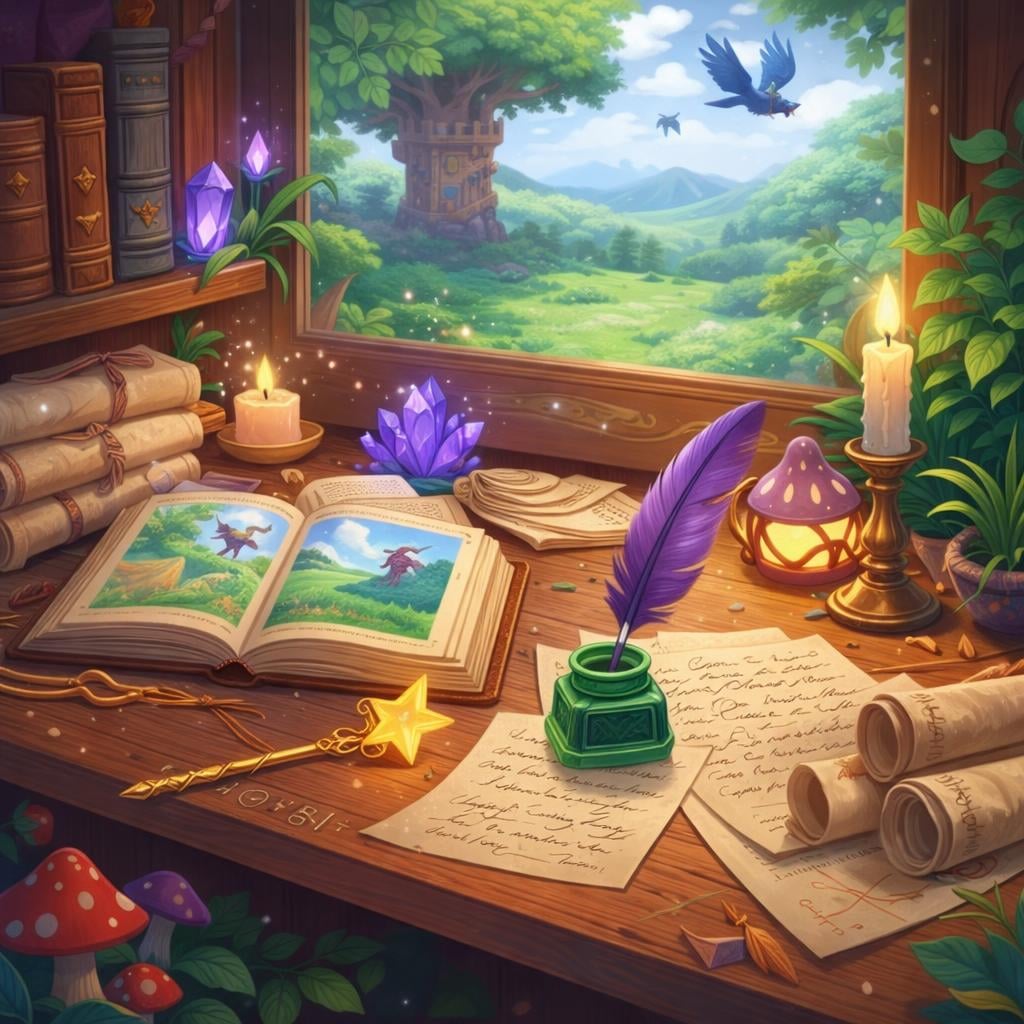
Summer is the perfect time for fantasy outdoor adventures. Not baby stuff. Not “go sit-in-the-grass” boring. Actual quests with secrets, easy rules, and a little drama.

I’ve built these adventures with kids in mind. Kids want a story they can grab onto, and a mission that moves. They want to say, “Okay… what do I do next?”

Ø  Pick a quest type that matches their energy: Some days you want to sprint around like a goblin got your sandwich. Other days you want slow and sneaky. Choose the vibe first. It saves fights later. 

Ø  The quick quest: 15 to 25 minutes. Boom. Done. You pick one goal. Find the hidden rune. Deliver the “antidote” for the illness. Rescue the lost dragon egg (a painted rock works).

v Make it feel real by adding one rule. Like “You can’t step on cracks” or “You must whisper in the Shadow Zone.” Tiny rules make kids take it seriously. 

Ø  The roaming quest: This one’s longer. You walk, explore, and collect “clues” along the way. Pinecones mean something. The veins in leaves are symbols. A map you drew is slightly wrong. Walking is a code for adventure. A roaming quest helps you rack up fun without thinking about “exercise.” 

Ø  The base camp quest: Not everyone wants to roam. Base camp quests happen in one spot. Backyard. Park picnic table. Even a small patch of trees. You set up a “camp” with a banner, a stash box, and a message board (a piece of cardboard is fine). Then the story comes to you. Messengers arrive. Monsters attack. A mysterious trader shows up. It’s all pretend, but it feels weirdly official.

  • Body rule: No pushing. No grabbing. No tackling. Ever.
  • Boundary rule: You point out the borders before the game starts.
  • Stop rule: One word ends the game instantly (like “Freeze”). Everyone listens.

Ø  Build the world fast with a few craft tricks: Kids get stuck because they think the world has to be perfect. Like a movie set. Nope. The brain fills in the gaps.

v Make a map that’s allowed to be messy. I recommend a “three-landmark map.” That’s it. Three things you can see. Big tree. Slide. Fence corner. Then you draw a path and add one danger zone.

o   What’s the one place that feels creepy in a fun way? Under the stairs outside. That big bush. The spot behind the shed. That’s your danger zone. Circle it in red. Instant tension.

o   Want it to feel extra real? Age the paper. Crumple it. Rub dirt on it. Don’t soak it. I’ve ruined maps that way and learned the hard way.

v Create creatures in two minutes. You don’t need to draw like a pro. You need creature rules. Use a quick recipe:

o   One body type (lizard, owl, blob, twig-person)

o   One power (echo-hearing, invisibility, sleep dust)

o   One weakness (can’t cross chalk, hates loud singing, distracted by shiny stuff)

o   Then you write/draw the creature on an index card. Not fancy. Just usable.

v Use props that don’t turn into chaos: Props can be amazing. Props can also turn into “I can’t carry all this stuff” arguments. Limit it. One prop per kid. Two max.

o   My go-to list: paper crowns, cardboard amulets, a “spellbook” notebook, chalk runes, ribbon belts, and painted rocks as gems. 

Ø  Six fantasy outdoor adventures you can run today

1.      The yard quest with checkpoints: Set up 5 to 8 checkpoints. Each checkpoint gives a clue or a “spell piece.” Like a word. By the end, the words form a phrase that unlocks the treasure.

o   Example phrase: “UNDER THE STONE DRAGON.” Then you hide a small box under a rock. Nothing expensive. Stickers. A new prompt card. A “royal decree” letter.

o   Keep checkpoint tasks short. Ten jumping jacks. Find something smooth. Speak the password to a tree. You’ll laugh. But it works.

2.      The enchanted obstacle course: This is for kids who like movement. You build a simple obstacle course. Then you rename everything like it’s magical.

§  Hopscotch becomes “Lava Runes”

§  Hula hoop becomes “Portal Ring”

§  Balance beam becomes “Bridge of Oaths”

And give each obstacle a story reason. “You’re carrying the egg.” “Your boots are cursed.” “A troll is listening.” Don’t overbuild these. Too many stations. Kids forgot the plot. Stick to 6-ish obstacles and one big finale. 

3.     The fantasy nature scout mission. You go outside and “collect evidence” of magical life. But you don’t take living things. You take notes. Drawings. Photos if a grown-up says it’s okay. Or you collect fallen items only. Give yourself a mission list like: Find a “dragon scale” (a shiny leaf). Find a “troll tooth” (a white pebble). Find “elf writing”  (bark patterns you sketch). This is sneaky learning. Observation skills. Patience. That detective feeling.

The prop-light fantasy hike story. On a hike, props should be light. No huge staffs. No heavy bags full of “loot.” That gets old after 12 minutes.  I like one tiny item that controls the story. A “compass” (even a paper one). A “sealed letter.” A “moonstone” (painted rock). Every time you reach a trail marker or a bend, you pull the item out and read the next scene. Scene cards are gold. Quick writing prompts. Tiny choices, like “Take the ridge path” or “Follow the creek sounds.”

5.     The capture-the-relic game. This one’s like capture the flag. But fantasy. Each team has a relic (a scarf, a painted stick, a beanbag). You hide it in your territory. You protect it with “guards” and “spells.” Spells are just rules, like “Freeze spell means you stand still for 10 seconds.” Keep it fair. Keep it simple. Nobody wants a spell lawyer argument for an hour. One tweak: add a healer. One player per team can “unfreeze” teammates by tapping them and saying a phrase. It keeps kids in the game. 

The dusk dragon rescue.  This is a short evening adventure. Not full darkness. Just that dusky time when shadows look dramatic. You hide “dragon eggs” (painted rocks) in safe spots around the yard or park area. Then the mission: rescue them before the Shadow Riders find them. Add a timer. Add a rule that you can only travel on “safe paths” (sidewalk, stepping stones, chalk lines). It gets kids moving. Games that feel like stories tend to keep you going longer than “go run around.” 

Ø  Safety rules that don’t kill the fun: The fastest way to ruin a fantasy adventure is getting hurt. Second fastest is a grown-up shouting “be careful” every ten seconds. Aim for calm rules up front. Use a three-rule setup:

  1. Body rule: No pushing. No grabbing. No tackling. Ever.
  2. Boundary rule: You point out the borders before the game starts.
  3. Stop rule: One word ends the game instantly (like “Freeze”). Everyone listens.

Also, check the ground. Holes. Wet leaves. Random broken branches. You don’t want a kid wiping out because he didn’t notice a slick patch under a swing set.

Ø  How to keep arguments from eating your quest: Kids fight over rules. It’s normal. But you can design around it.

o       Use visible rules. I recommend writing rules on a “quest board.” Cardboard. Chalkboard. Whatever. If the rule is written down, you don’t have to debate it forever.

o       Make one kid the narrator. Narrator isn’t “boss.” Narrator is the person who describes what happens next. They don’t decide who wins every moment. They just keep the story moving. Switch narrators halfway through. Kids love the power. But they also need turns.

o       Add a fair way to settle weird moments. Sometimes you’ll hit a “Wait, did that spell    hit me?” moment. Use a coin flip or rock-paper-scissors. Fast. Clean. Then you move on. I’m not a fan of endless arguing. It drains the magic and the fun.

Ø  When your imagination runs out: This happens to everyone. You’re mid-quest and your brain goes blank. Poof. Having a tiny stack of writing prompts or scene cards is an imagination saver. Not a whole book. Just 10 cards. You pull one and keep going. “A messenger arrives.” “A door appears in a tree.” “Your map starts changing.” Easy. Kids are actually really good at this. You just need permission to be weird. 

The takeaway 

Pick one quest. Add one rule. Give it a clear ending. Treasure, message, rescue, whatever. Then help them play it outside like they mean it. Loud passwords. Serious faces. Ridiculous magic. Give them the power to create. Don’t over-manage. That’s the whole enchantment for having fun!

 If you want more craft tools from my corner of the fantasy world, this blog is where I’ll share more articles and advice connected to my work as a fantasy author. Check back often or follow me on social media where I will announce new articles.

Website & Social Media:

Website             https://debcushman.com

Facebook          https://www.facebook.com/debcushmanwriter/

Instagram         https://www.instagram.com/cushmandeb

X                           https://x.com/DebCushman

Bluesky              https://bsky.app/profile/debcushman.bsky.social

Threads             https://www.threads.com/@cushma

 Deb Cushman's Chronicles of Nadavir
Frigg's Journey to Anasgar
Ping's Mystery in Pixiandria
https://debcushman.com


Monday, July 27, 2026


Enhancing Creativity for Authors: A Writing Guide

     Creativity is a working system. For authors, the real problem usually isn’t “I have no ideas.” It’s “I can’t get the good ones to show up on schedule.” I’ve been there. The blank page is loud.  Here are some practical ways I’ve used to spark ideas, keep them alive long enough to draft, and protect my focus when my brain wants to wander off into the wild.

 Ø  Making creativity predictable enough to trust

Most writers wait for the mood to write, and then feel betrayed when the mood doesn’t show up. I’ve worked hard over the years to build a routine that has trained my brain to show up even when the muse is out getting snacks.

Creativity behaves like any other skill. The more often you practice, the easier it is to access. You can improve your creative output.

 Ø  Pick a tiny daily habit, not a heroic ritual.

I recommend a “minimum viable writing start.” Something you can do even on a messy day. For me, it’s 10 minutes of scene scribbling in plain text. Not pretty. Just movement.

Why small? Because starting is the choke point. A large 2019 analysis in Nature Human Behaviour found that habits are strongly tied to context cues and repeatability, not willpower, and habit formation often takes around 2 to 5 months for many people. Tiny doorways are easier to enter and repeat daily. Big doorways often get postponed.


Ø  Use a consistent cue

Sit in the same chair. Listen to the same playlist. Drink the same beverage. Light the same candle. Write with the same pen. Your brain loves a “this means I’m writing” signal. My cue is soft instrumental music. The first notes hit, and my brain goes, “Oh. Time to write.”


Ø  Don’t rate your output while you’re generating it

Drafting your work and judging it at the same time can stall creativity. Separate them. Draft now. Judge later.

 Ø  Feed the idea engine with better inputs

A lot of creative droughts are really input droughts. You can’t keep pulling rabbits out of an empty hat. You need to fill that hat with inspiration. But not all inputs are equal. Doomscrolling social media isn’t research. It’s brain lint. I like inputs that have texture: myths, anthropology, odd history, botany, extinct animals, obscure tools, old maps. Stuff with a bit of heft. 


Ø  Create a personal reference library

Not a huge one. A usable one. I’m a fantasy writer, so I keep fantasy sources on hand that I can return to: mythology books, craft books, world history books, field guides, and a stack of novels that do something I admire (voice, pacing, magic logic, whatever).

The saying is “steal like an artist,” but steal the right thing. Don’t steal someone’s plot or specific words. Study their technique. “How did they make a prophecy feel fresh?” Or “How did they make a tavern scene not boring?” Technique is fair game. It’s also more useful.


The image shows a bookshelf filled with various books on Norse mythology, fairy tales, and fantasy literature.

AI-generated content may be incorrect.

Ø  Go analog for raw materials

When I’m collecting sparks, I usually do it on paper. I love writing my ideas in notebooks. It keeps me from editing myself into silence. And it keeps the internet out of the room. Research on attention regularly finds that even brief digital interruptions reduce performance on complex tasks, and it can take over 20 minutes to regain focus after an interruption in workplace studies. That “just checking” costs more than it seems.


Ø  Use constraints to get unstuck faster

Constraints can feel like handcuffs. But for most of us, total freedom is the actual trap. When anything can happen, nothing happens.

I recommend picking one constraint per session. One. “This scene has to end with a betrayal,” OR “No dialogue allowed,” OR “Magic fails in a nonviolent way.” Constraints decide for you, and that’s a relief.

Why does it work? Because decision fatigue is real. Research on cognitive load shows working memory is limited (often cited as around 4 chunks for many tasks), which means too many open options can overwhelm your ability to generate and evaluate ideas. Fewer options. More motion.

 Constraint ideas that play nice with fantasy

·        Magic rule: one spell must have an unexpected cost that isn’t physical harm.

·        Culture rule: the character can’t lie directly because of a social taboo, so they have to evade.

·        Creature rule: the monster isn’t evil. It’s territorial. Or bored.

·        World rule: sunlight does something strange. Memory fades. Metal sings. Time skips.


Ø  Try the three-lever scene check

When a scene won’t go, I ask: what lever is missing?

1.       Desire: what does the POV character want right now, not eventually?

2.      Pressure: what gets worse if they hesitate?

3.      Reversal: what flips by the end of the scene?

         If you only fix one lever, fix the pressure. Pressure forces the character to make choices.


Ø  Build a repeatable idea-capture system

It happens to me all the time! I get a great idea in the grocery store, and then it vanishes by the time I reach the parking lot. That’s not me being flaky. That’s biology. Short term memory is not a safe storage device for stories. Without rehearsal, people can forget a large portion of new information within days, and the “forgetting curve” shows rapid early loss. Capturing that idea beats “I’ll remember it” every time.

My two-note method

I keep two buckets:

1.       Seeds: single sparks. A line of dialogue. A curse concept. A setting image.

2.      Scenes: anything that already has motion. Somebody wants something. Somebody blocks it.

Seeds are allowed to be dumb. Scenes have to include friction. That’s the only rule.


Ø  Tag by problem, not by trope

Tagging “dragons” is fine, but tagging “betrayal setup” OR “awkward alliance” is better. When you’re drafting and you need a fix, you’ll search for the problem you’re solving, not the aesthetic.


Ø  Turn research into story without drowning in it

Fantasy writers love research because it feels like progress and it’s not scary like drafting. I’m not judging. I do it too. But research needs to translate into tangible results on the page.

My rule: research until you can write the scene. Then stop the research and start writing.

Studies on procrastination often report that around 20% of adults identify as chronic procrastinators, and tasks that are ambiguous or emotionally loaded tend to trigger it more. Research becomes a hiding place when the scene feels risky.

Use the one-detail rule:

For each researched topic, I pick one detail that will show up on the page as a sensory moment or a constraint. One. Not five. If you add more, it starts reading like a textbook. If you honestly feel you need more when you revise, you can add another one.


Ø  Convert facts into consequences

Instead of “here’s how medieval tanning works,” write about the tannery stench clinging to the character and how others recoil when he passes. Facts become story when they create emotions and problems.


Ø  Protect your creative focus like it matters

Admit that your attention, not having time, is the resource. You can have a whole Saturday free and still produce nothing if you can’t concentrate. Tell your brain that you are not going to be distracted, then keep reminding yourself each time you’re interrupted.

Before you start, do a 2-minute sweep:

·        Open only the docs you need.

·        Put your phone across the room (yes, really).

·        Write one sentence about what you’re writing next.

That last part is sneaky powerful. It reduces the “where do I begin” stumble.


Ø  Use sprints, but don’t worship them

Some writers love 25-minute timers. Some hate them. I’m mixed. Sprints work when I need a nudge. They don’t work when I’m finally in flow and the buzzer kicks me out of the world.

If you’re unsure, try 15 minutes. Low stakes. Keep going if you’re rolling. Remember to take breaks eventually, or you'll burn out.


Ø  Get more inventive scenes with character-based prompts

Plot prompts are fine, but character prompts tend to produce fresher material because they force a specific voice to make choices. And fantasy especially thrives on voice + worldview. A sorcerer thinks differently than a thief. Even when they both want the same thing. I like prompts that force a value conflict. When I know what my character won’t do, I get sharper scenes. 

Five prompts I actually use

·        Your protagonist must accept help from someone they dislike. What do they demand in return?

·        A spell works, but it changes public perception of the caster. How?

·        Two characters want the same outcome for opposite reasons. What does that sound like in dialogue?

·        A sacred rule is broken for a compassionate reason. Who calls it heresy?

·        The villain tells the truth. The hero lies. Why?


Ø  Try the secret third option

When your scene feels predictable, list two obvious choices. Then force yourself to invent a third. Not a random twist. A third choice that fits the character and the world’s logic. It’s annoying. It’s also where the good stuff hides.


Ø  When creativity collapses, diagnose the real cause

Use this when you sit down to write, and nothing happens. The cursor blinks. Your mind goes blank. That doesn’t always mean you’re “blocked.” It often means one of a few fixable things is going on.

·        You’re tired, not uninspired. Sleep debt makes imagination feel far away. I can’t outwrite exhaustion. Most of the time, neither can you.

·        You don’t know what the scene is doing. If you can’t answer “what changes by the end,” the scene will falter. I’ll sometimes write a blunt scene mission at the top of the draft like: “Goal: get the prince alone. Complication: the oath can’t be spoken indoors. Turn: the rival overhears anyway.” Then I write with more clarity.

·        You’re trying to write the perfect version first. This is the big one for authors who care (which is most of us). You want the sentence to sing immediately. But early drafts are scaffolding. They’re allowed to be ugly. If you need permission, you have it. Draft like nobody’s watching. Edit like you’re merciless.

 Your takeaway and what to do next

Creativity isn’t something you wait for. It’s something you set up. Feed your inputs, add constraints, capture ideas before they evaporate, and protect your attention like it’s part of the job of writing. Because it is.

Pick one change today. My vote? Commit to a tiny daily writing doorway and a simple daily mission note. Do that for a week and see what shifts. Usually, you’ll feel the difference fast.

 If you want more craft tools from my corner of the fantasy world, this blog is where I’ll share more articles and advice connected to my work as a fantasy author. Check back often or follow me on social media where I will announce new articles.


Deb's Website & Social Media:

Deb's Website

Facebook

Instagram

X

Bluesky

Threads


Tuesday, July 14, 2026

Norse Mythology for Kids! Meet Thor

 Norse Mythology for Kids! Meet Thor

Thor isn’t just “the hammer guy”—he’s the protector type in many stories.


• Symbol: Mjölnir (his hammer)
• Vibe: big energy, big heart, sometimes a big temper
• Myth tip: Thor’s stories often feel like action-adventures (perfect for 8–12)

Did you know that the word “Thunder” comes from the same ancient word as Thor, the thunder god? Long ago, people believed thunder was the sound of Thor swinging his mighty hammer across the sky.


Summer Norse Mythology activities:


1. Research the origin of the word “Thursday.” Can your child guess where it came from?


2. Make Your Own Mini Mjölnir - Kids cut out a cardboard hammer and wrap it in aluminum foil, add runes with marker, and choose a “power” (kindness, bravery, helping others). Bonus: Have them “charge” it by tapping it on the ground and shouting their power.


3. Thunder Relay Race - Kids run a short course carrying a “hammer” baton. Each station represents a Norse challenge:
  • Cross the rainbow bridge (a taped line)
  • Dodge frost giants (cones)
  • Call the thunder (a big stomp)
4. - Try a fun writing prompt: “If Thor showed up at your school for a day, what do you think he’d do first?”

Parents/teachers: Do your kids like heroes who are serious, silly, or a mix of the two?


Deb Cushman's Chronicles of Nadavir
Frigg's Journey to Anasgar
Ping's Mystery in Pixiandria
https://debcushman.com

Monday, July 6, 2026

Middle Grade Kids Are Building an Identity


One Reason I Write for Kids: 

Middle Grade Kids Are Building an Identity

Kids ages 8 to 12 still believe stories can make their day. That’s one of the many reasons that I love to write for these kids. Honestly, that belief changes my day too.

If you’re a parent or an educator, you’ve probably seen the mood swing that can happen in one afternoon. A kid walks in from recess or home from school upset about a friend, or they bomb a math quiz and decide they’re “bad at school forever.” Then they pick up a book to forget about their problem. Ten pages later, their shoulders relax. They’re back. That’s the moment I’m chasing when I write.

Thing is, middle grade kids (in publishing, that 8 to 12-ish range) are in a weird and wonderful stage. They’re not little anymore. They can handle some nuance. They notice hypocrisy. They also still want magic and jokes and big feelings. It’s a great combination.

This is when kids start quietly building an identity. Not the loud “I’m a dinosaur” identity from when they were younger. More like, “I’m the kind of person who…” reads mysteries, loves baseball, always gets picked last, makes people laugh, doesn’t talk in class, helps younger siblings, or worries too much. Stories slide right into that identity-building process.

They’re practicing adulthood without the safety rails. I mean, they still have safety rails (thank goodness). But socially? Not always. Friend groups start to solidify. Status becomes a thing. Kids test out sarcasm. They experiment with kindness, too, but they don’t always know how to do it without feeling uncool.

When I write, I’m thinking about the kid who’s trying to act okay while their stomach is doing flips. A story can name what’s happening without making them feel “diagnosed.” That’s delicate work. I love it.

They can read subtext, but they don’t want lectures. Most people underestimate how sharp 9-, 10-, and 11-year-olds are. They spot patterns. They notice when an author is trying to teach them something. If it feels like a lesson? They’re out.

I try to show a character making a choice, messing it up, repairing it, and living with the ripple effects. Kids don’t need the moral spelled out. They want the truth… in story form.

So, why I love writing for kids is pretty simple. This age group is learning how to be a person in public. Books give them a private place to practice.

And for you, the parent or educator trying to raise a capable, decent human while also getting through Tuesday, a good middle grade story is one of the few tools that can feel like comfort and growth at the same time. That’s why I keep coming back to it.


For 60+ fun activities for kids, check out my Nadavir Kids Club. Every month a new activity is added and announced in my newsletter.
Visit my website to sign up!


Deb Cushman's Chronicles of Nadavir
Frigg's Journey to Anasgar
Ping's Mystery in Pixiandria
https://debcushman.com


Monday, June 22, 2026

The Stages of Writing a Journal Entry


The Stages of Writing a Journal Entry

(A Totally Serious, Extremely Scientific Breakdown) 

1. The “Nothing Happened Today” Declaration

You open your journal, stare at the page, and conclude that your life is so uneventful it could be used as a sleep aid.

2. The Sudden Overshare

Five minutes later, you’re pouring out your entire emotional history, three unresolved grudges, and a rant about something that happened in 2014. So much for “nothing happened.”

3. The Dramatic Narrator Phase

You start writing like you’re the protagonist of a Victorian novel. Everything becomes “a most curious turn of events,” even if it was just you losing your keys again.

4. The Existential Detour

You pause mid‑sentence to question your purpose, your goals, your habits, and whether you should start meditating or buy a houseplant. You write none of this down coherently.

5. The Tangent Tornado

You begin describing your day, then somehow end up listing your grocery needs, analyzing a dream you barely remember, and planning a future you’ll forget about by tomorrow.

6. The Hand Cramp Crisis

Your hand suddenly decides it has had enough of your emotional monologue. You consider switching to typing, but that feels illegal for journaling, so you suffer nobly.

7. The “This Is Actually Pretty Insightful” Moment

You reread a paragraph and think, “Wow, I’m kind of wise.” You briefly imagine future historians studying your journal like it’s a sacred text.

8. The Abrupt Ending

You get tired, distracted, or hungry and end the entry with something like “Anyway, I’ll finish this later,” knowing full well you absolutely will not.


Deb Cushman's Chronicles of Nadavir
Frigg's Journey to Anasgar
Ping's Mystery in Pixiandria
https://debcushman.com


Monday, May 18, 2026

The Stages of Writing a Short Story


The Stages of Writing a Short Story

(A Totally Serious, Extremely Scientific Breakdown)

I’ve been working on several short stories that are in various stages of revision. Perhaps it’s my love of short-story writing, regardless of the narrow market to publish them, or it’s my procrastination from work on my next novel. Whatever the reason, I’ve discovered that there are several stages (ten to be exact!) that I must go through to reach the stage when I feel the story is finally finished.

1. The Spark of Genius

A tiny idea pops into your head, possibly in the shower or while avoiding cleaning the oven, and you’re instantly convinced it’s the greatest concept ever conceived by humankind.


2. The “This Will Be So Easy” Phase

It’s a short story. How hard could it be? You imagine yourself finishing it in an hour, maybe two, and then spending the rest of the day basking in your own brilliance.

3. The Blank Page Standoff

You sit down to write. The cursor blinks. You blink back. A tense silence fills the room. One of you will break first, and it’s usually you.

4. The Overwriting Spiral

You write a paragraph. It’s beautiful. It’s poetic. It’s 300 words describing a tree. You remind yourself this is supposed to be short, but your muse is on a roll and refuses to be concise.

5. The Sudden Plot Crisis

Halfway through, you realize you have no idea what happens next. Your characters are glaring at you like, “Well? You brought us here. Figure it out.”

6. The “Cut 90% of This” Revelation

You reread your draft and discover that your “short” story is now 4,000 words too long and contains three unnecessary subplots, two monologues, and a metaphor you don’t even understand anymore.

7. The Editing Frenzy

You slash sentences, rearrange paragraphs, and delete entire scenes with the cold efficiency of a medieval executioner. You briefly consider cutting the whole story and starting a new life on another planet.

8. The “It’s Done… I Think?” Moment

You reach a point where you can’t tell if the story is brilliant or absolute nonsense. You decide it’s finished because you simply can’t look at it anymore.

9. The Sharing Panic

You send it to a friend, critique partner, or writing group. Then you immediately regret it. What have I done? becomes your new mantra.

10. The Inevitable New Idea

You swear you’re taking a break from writing for a year or two. A week later, a new idea taps you on the shoulder like, “Hey. What if this happened?” And the cycle begins again.


Deb Cushman's Chronicles of Nadavir
Frigg's Journey to Anasgar
Ping's Mystery in Pixiandria
https://debcushman.com


Norse Mythology for Kids

  Norse My thology for Kids Ages 8 to 12 Kids want to know about Norse mythology. The real one. Not the watered-down “everyone is nice and...